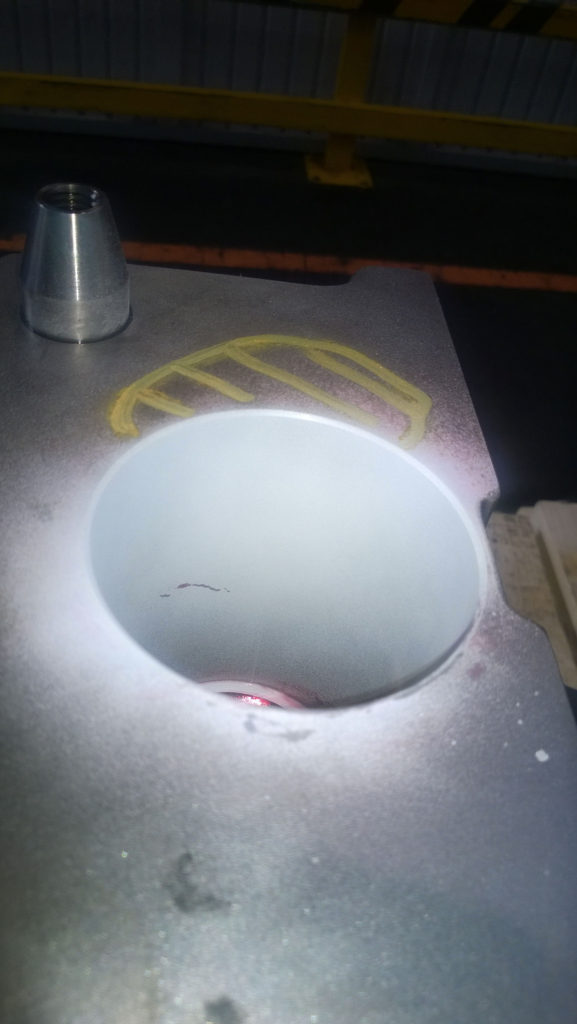


The penetrant test is a purely superficial control in which the discontinuity to be detected must be opened on the surface to allow the penetrating liquid to enter it by capillary action.
It is among the best known and used non-destructive testing methods for the great versatility of use and “the apparent” ease of execution. It can be applied to any metallic or non-metallic material (resins, plastics, etc.). provided they are not excessively porous and are inert to the products used for the examination. Often the penetrant testing is used on non-magnetic materials (stainless steels, aluminum) on which magnetoscopic control is not applicable.
Cracks, overlaps, porosity, lacks of fusion, passing slits (leak detection) are among the most frequent defects that are detected with the control with penetrating liquids.
The penetrant test can be performed manually, using the common spray cans or brushes for the application of products, semi-automatic or automatic requiring fixed systems, custom-designed for each specific requirement.
Tecnocontrol is not equipped with fixed systems, but performs checks with penetrating liquids almost exclusively by third parties (on-sites, workshops) using the manual method, certified products and qualified personnel with proven experience.
If necessary, we test the products we use to evaluate the level of sensitivity, using the appropriate reference blocks provided by the main reference standards (eg ASME Blocks A and B, ISO 3452-3 Blocks No. 1 and 2)
The most frequent applications of our competence are:
- Checks during the welding process: PT on bevels, PT on intermediate passes (less frequent), finished welding, repaired areas, etc.
- Controls on machined components (rollers, gear wheels, crankshafts, etc.)
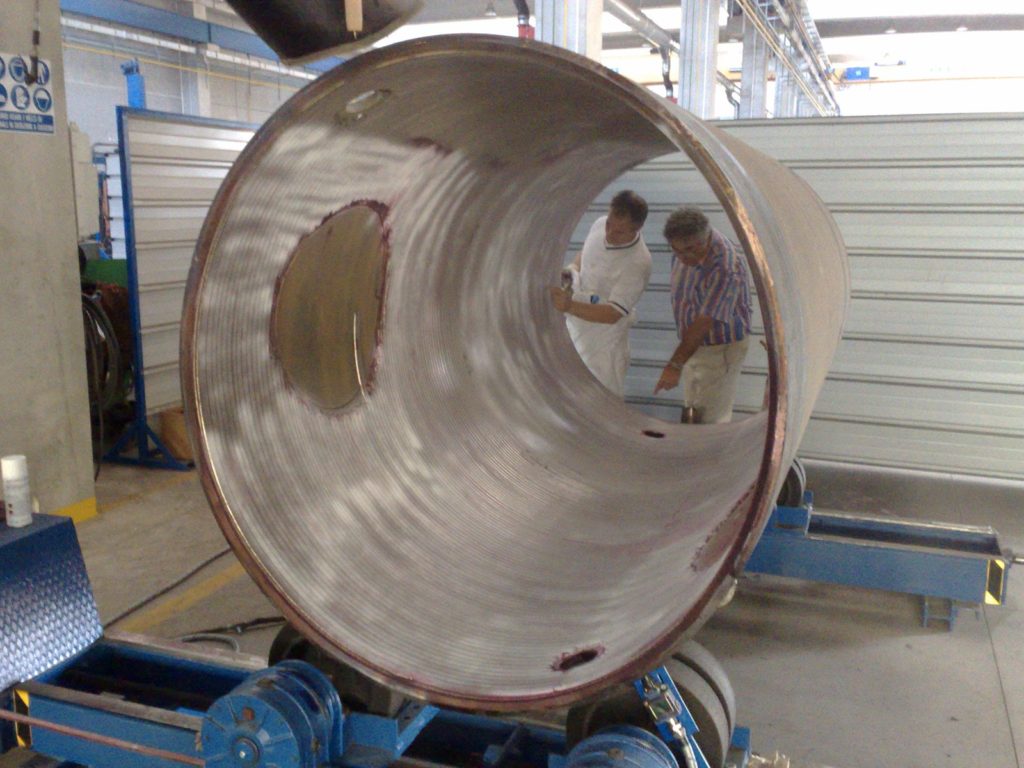
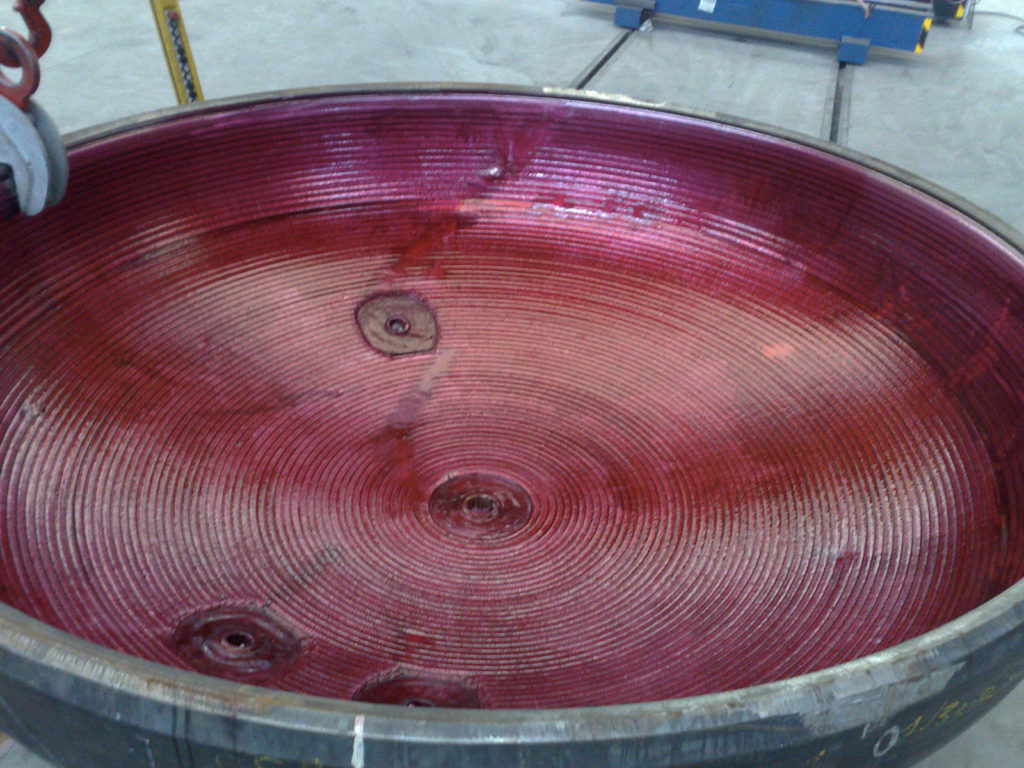
- Controls on cladding of pressure vessel in the petrochemical sector.
The staff is certified ISO 9712 or SNT-TC-1A liv.2 and liv.3
We naturally have the necessary Luxometers and Radiometers certified for the measurement of light intensity and UVA rays